

Bratislava and its city districts are continuously developing and growing. The number of connection points is increasing rapidly, as are the requirements for reserved capacity with a growing number of applications for the connection of renewable energy sources. At the same time, the number of electric vehicles is increasing, creating additional demand for infrastructure.
From the perspective of the transmission system, it is necessary to create conditions that ensure the rapid growth in electricity demand does not result in a decline in supply quality. The new 400/110 kV Vajnory substation, which was planned in the long term to meet the expected future electricity consumption in the Bratislava metropolitan area, will sustainably secure the supply needs of the northern part of the capital Bratislava. The substation has been designed to be unmanned and is equipped with a control and information system that enables remote control and operation.
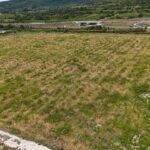
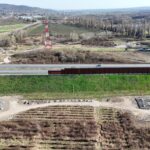
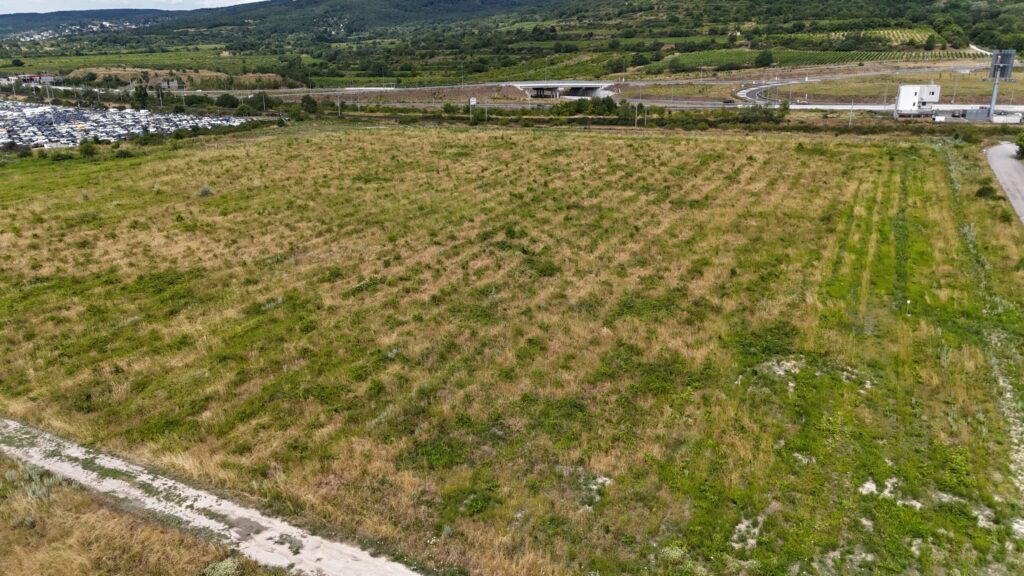
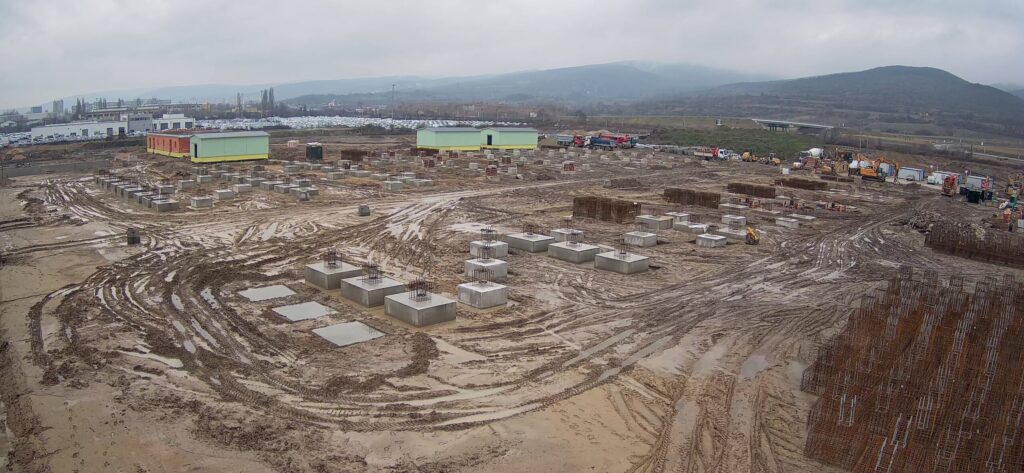
The Vajnory substation is located on land east of the Bratislavské elektrotechnické závody company premises, near the Lagermax industrial site and the Bratislava–Pezinok railway line. It is accessed via “Na doline” road, better known as “Jurská cesta”.
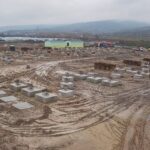
After several years of preparation, construction of the Vajnory substation began in summer 2025 with the expected completion in spring 2027, when it will be put into operation. Once operational, it will enhance the quality and reliability of electricity supply not only in its immediate vicinity but also across the wider Vajnory area. The substation will also improve the system’s capability to manage non-standard operating conditions and emergencies.
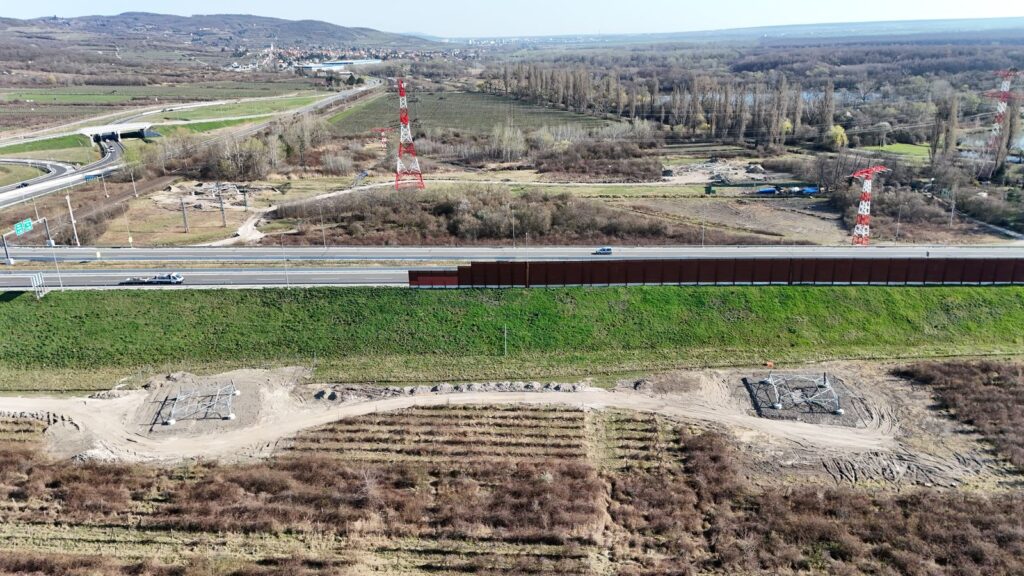
The new Vajnory substation will be connected to the national transmission grid by loop line of new 400 kV overhead line. For the connection it is necessary to carry out works on Stupava – Podunajské Biskupice power line route. This will require the dismantling of one existing 400 kV transmission tower and the construction of four new 400 kV towers in Vajnory and one transmission tower in Stupava.
Myths and facts on the substation construction and use
The substation construction and its operation will not cause substantial increase of the noise level in regard to the existing presence of the railway truck and motorway. For illustration purposes, a noise level of the 400 kV transformer will be at the level of a dishwasher in the common household. In relation to the distance of the substation from the residential part of the municipality, the inhabitants will not record the influence of noise load.
We assume that during the construction process a driving lane will be available for pedestrians, cyclists and sporadic motor vehicles with permit. The details of the solution will be subject to discussion with the building authority. The construction traffic will be separated safely from the pedestrians and sport users. After the completion of the construction, the original condition of Jurská cesta will be maintained.
Since the substation will be built as an unattended, no constant presence of the ZSD or SEPS employees will be required during its operation. The traffic load in the location will thus be increased against the current one only minimally after the substation completion.
In case of damage of the road or associated land and buildings or road greenery, their original condition will be maintained.
To build the substation, ZSD and SEPS were awarded a grant from the Connecting Europe Facility (CEF-E) with 35 % funding rate of eligible costs, further costs of the investment will be financed by both companies from their own sources. Construction of Est Vajnory is a part of the “Danube InGrid” (Danube Intelligent Grid) Project of Common Interest of the European Union. Projects of Common Interests (PCI) are key infrastructure projects aimed at integration of the European internal market in energy, the goal of which is to ensure energy security and assistance to the EU upon achieving goals in the area of energy and climate policy.
The protected plant species is not situated directly on the land on which the Vajnory substation will be located. During the construction process, execution of the activities that would threaten the location where the protected species of the globe flower can be found is not anticipated.